
You can write a warm, honest dating profile without publishing your full identity or medical history. Share interests, relationship intentions and a broad location; keep identifying details and sensitive documents out of your public introduction. Before adding health information, check who can see it, whether it is optional and how the service explains its use.
For adults exploring herpes or STI dating in the UK, privacy can feel unusually personal. You may be comfortable talking about HSV with someone you trust while feeling differently about a searchable profile. Those preferences can coexist. The useful question is what each detail helps another person understand, and whether that benefit justifies sharing it with that audience.
The essentials before you publish
- Describe your personality with specific interests, without revealing a predictable schedule.
- Check photographs for addresses, workplace details and other people who have not agreed to appear.
- Treat health fields separately from the rest of your biography and inspect their visibility.
- Protect the email account connected to your profile, as well as the dating account itself.
- Recheck privacy settings before moving a conversation to another app.
These are practical editorial suggestions, rather than a description of features available on every dating platform. Use the site FAQ for orientation and inspect the current service settings before relying on a particular control.

Decide what belongs in a public introduction
A helpful profile gives someone a way to start a conversation. It does not have to answer every question they might eventually ask. Imagine an introduction at a friend’s dinner: you might mention gardening, a recent novel or the kind of weekend you enjoy. You probably would not hand over your home address or your work rota.
Separate information into three groups before writing. The first is suitable for a wider audience: hobbies, broad values and what sort of connection interests you. The second belongs in a developing conversation: more detail about your family situation, availability or personal experiences. The third needs a clear purpose and a trusted channel: financial information, identity documents and health records.
This is an editorial planning exercise, not a promise that private messages remain confidential. A recipient can retain or share what you send. Choose details you are comfortable putting in writing, even when a conversation feels kind and familiar.
A useful opening might be: “Manchester based, happiest in a second-hand bookshop, and learning to cook something beyond my usual three dinners. I would enjoy meeting someone for conversation and seeing where things go.” It communicates place, personality and intention without giving a street, employer or weekly timetable.
Write specifically without making yourself easy to locate
Specificity makes a profile human. The trick is to be specific about your tastes and less specific about your movements. “I love a quiet café and a long conversation” offers more room for privacy than naming the café where you sit alone every Tuesday at seven.
The same distinction applies to work. “I work in education” may be enough for an opening conversation. Naming a small school, adding a staff photograph and listing your commute gives a stranger several ways to identify you. Consider how details combine, particularly if you live in a small town or have an unusual job.
For a displayed name, follow the service’s rules and use the least identifying option you are comfortable with. Avoid reusing an unusual username that leads straight to a professional profile or an old public account. This reduces an obvious connection between accounts; it does not make you anonymous or prevent recognition.
Give relationship intentions room too. “I prefer getting to know one person gradually” is clearer than a long list of people you do not want to hear from. A boundary can be welcoming and firm: “I enjoy thoughtful messages and do not usually exchange phone numbers immediately.” You are helping a compatible reader understand how you communicate.
Review photographs as carefully as the words
Choose recent photographs that represent you accurately and feel comfortable to share. Look beyond your face before uploading: an envelope on the kitchen table, a building name, a work badge or a visible house number may reveal something you did not intend to publish.
Use an image you have permission to post. A solo picture is often simpler than a group photograph because it avoids exposing friends, colleagues or children and makes clear who the profile represents. Cropping someone out is useful only if the remaining image still feels natural and does not leave identifying details behind.
A photograph already used on an open professional or social account can help connect those accounts. Choosing a different photograph may reduce that straightforward connection, but cannot guarantee that an image or face will not be recognised. Avoid treating any photo choice as a technical shield.
Also inspect what appears on screen after the upload. Check the thumbnail crop, caption and public view if the service provides one. An image that worked in your camera roll may appear very differently in a small circle. For a profile about companionship, one clear portrait and a relevant interest can say more than a crowded gallery.
Handle health information as a separate decision
The Information Commissioner’s Office identifies information concerning health, sex life and sexual orientation as special category data under the UK GDPR. Its guidance also explains that health data can include diagnoses and test results. That makes the questions around an STI-related profile field materially different from choosing your favourite music. Source: ICO, special category data.
Before completing an optional health field, find out whether it appears on the profile, who can access it and whether you can change your answer later. Look for a clear explanation of why the information is collected. If that explanation is missing or confusing, pause and ask the service through a verified support route.
A dating profile is not a clinical record. Uploading a laboratory report may expose your name, date of birth, clinic details or other results. It also cannot replace an informed conversation about sexual health. Do not feel obliged to send sensitive documents to another member simply because they demand proof.
You can choose what belongs in a public introduction while still making space for honest discussion before sexual contact. Our guide to talking about herpes with a new partner addresses that conversation more fully. Different infections raise different medical questions; a dating community is not a substitute for individual advice from a sexual health professional.
Read the controls instead of relying on their names
A setting called “private” is only useful when you understand its effect. Check whether it changes visibility to other members, people outside the service, search engines or only a narrower group. Likewise, hiding a profile, pausing activity and deleting an account may have different outcomes.
Use this small comparison when reviewing any dating service:
| Question | What to look for |
|---|---|
| Who can view my profile? | A clear description of the audience, including access outside a signed-in account. |
| What happens to my location? | Whether the display uses a broad area, distance or more precise information. |
| Can I change a health field? | Instructions for editing it and an explanation of its visibility. |
| What does account closure do? | An explanation of deletion, any retention and what happens to messages. |
| Where can I ask a question? | A current support route linked from the service itself. |
Do not assume those features exist because they appear in a comparison checklist. If a service does not explain a control, treat its effect as unknown. Our privacy page concerns this website; it does not replace the policy of a separate account service. Read the policy that applies at the point where you actually register or upload information.
Protect the account behind the profile
The National Cyber Security Centre recommends a strong, separate email password, two-step verification and keeping software updated. Email deserves particular attention because it can provide access to other accounts through password resets. A password manager can help create and store different passwords. Source: NCSC online security guidance.
Apply the same care to the dating account. Use a unique password and enable additional sign-in protection if offered. Keep recovery details current, and do not pass a verification code to someone in a conversation. A message claiming that a code proves you are a real person is not a reason to hand it over.
On a shared computer, sign out after use and avoid leaving a session open. On your phone, consider whether message previews on the lock screen reveal more than you want people nearby to see. These are small household privacy decisions as much as technical ones.
If you use a mobile app, review permissions in your device settings. Decide whether access to contacts, photos or location is needed for the action you are taking. Our mobile information page provides a starting point, but the current app and device settings are where you should verify available choices.
Keep control when a conversation moves elsewhere
Moving from a dating account to a phone number or social profile can reveal more than another messaging channel. The new account may display a surname, profile photograph, workplace, friends list or old posts. Review it from the perspective of someone who has only just met you.
The NCSC advises reviewing privacy settings and managing the information you share on social media. That principle applies when deciding which account to connect to a developing relationship. Source: NCSC social media guidance.
You can say, “I am enjoying chatting here and would like to stay on this service a little longer.” Someone being disappointed does not obligate you to change your boundary. Consider how they respond to a reasonable limit, rather than treating fast disclosure as evidence of trust.
Financial requests deserve a separate stop. In its October 2025 review of 60 confirmed romance fraud cases across six firms, the FCA found that 85% began on online platforms, including social media and dating websites. This is a selected sample of fraud cases, not the proportion of dating users who encounter fraud. The finding shows why a familiar online conversation is not enough to verify a request for money. Source: FCA review, published October 2025.
Do not send money, buy gift cards or follow an investment link because an online contact asks. If money has already moved and you suspect fraud, contact your bank promptly using its official app or a verified number. Consult our safety guide for further reporting routes and boundaries.
Give your profile a calm final check
Read your introduction once as a potential date and once as a stranger. The first reading asks whether it sounds like you and offers a useful conversation starter. The second asks whether you have unintentionally revealed a workplace, precise routine or detail that belongs in a later discussion.
Then check the relationship between the text and the pictures. Three harmless-looking details can collectively identify a small location. Remove anything you included only because you felt pressured to make the profile look complete. A short, considered introduction can be enough to begin.
Revisit these choices when your circumstances change, when you add pictures or when a service changes its settings. If conversation progresses towards meeting, use our guide to planning a comfortable date. Privacy is one part of a thoughtful introduction; the aim is to leave enough room for a real person to get to know you gradually.
Questions people often ask
Must I put my diagnosis in my profile biography?
Check the service’s requirements and distinguish a public biography from optional health fields. You do not have to turn your introduction into a detailed medical history. Make a deliberate choice about the audience, and plan an honest sexual health conversation before sexual contact rather than relying on someone having read a profile.
Can a private profile guarantee nobody recognises me?
No. Settings may limit access, but they cannot promise that an authorised viewer will not recognise you, take a screenshot or share what they see. Check the actual audience and publish with that limitation in mind.
How can I sound interesting while sharing less?
Describe preferences and small experiences: a book you enjoyed, a dish you are learning or what makes a good Sunday. Avoid precise routines and identifying paperwork. Warmth usually comes from a recognisable voice, not from the quantity of personal information disclosed.
Where should I start if I feel overwhelmed?
Draft three sentences offline: something you enjoy, the connection you would like and your preferred pace. Review the account controls before publishing. You can return to our reading collection for one subject at a time instead of trying to resolve every dating decision in a single evening.
Sources and editorial notes
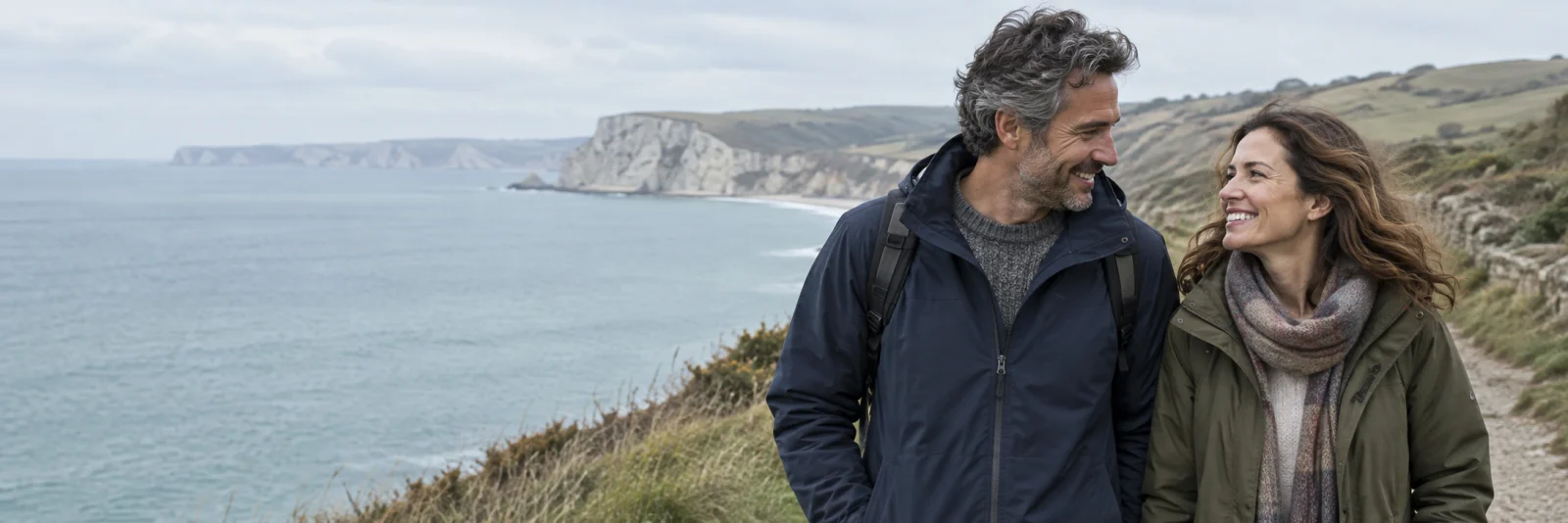
Sources accessed on 9 September 2026. This article offers general privacy and dating guidance, not individual legal or clinical advice. Platform controls vary. The photographs are illustrative scenes and do not identify members or suggest anyone’s diagnosis.
- Information Commissioner’s Office: What is special category data?
- National Cyber Security Centre: Top tips for staying secure online
- National Cyber Security Centre: Social Media — how to use it safely
- Financial Conduct Authority: Combating romance fraud — prevention, detection and supporting victims